Diamond Shine Blogs
Why Your Windows Keep Streaking
You clean the windows, step back, and the light catches a haze of streaks that weren’t there when you started. It’s a demoralising result, because the glass genuinely looks worse than if you’d left it alone.
The cleaner is almost never the problem. It’s one of five other things — and the last one isn’t dirt at all.
1. You’re cleaning in direct sunlight
This is the most common cause, and it has nothing to do with technique. Sun-warmed glass evaporates the cleaner before you can wipe it off. What’s left behind is the residue the liquid was carrying — dissolved dirt and surfactant, dried in place in exactly the pattern your cloth was moving.
Work the shaded side of the house and follow the shade around as the day moves. Overcast days are ideal; early morning and late afternoon both work. If the glass is warm to the touch, come back later.
2. Your cloth leaves more behind than it picks up
Paper towels shed lint onto glass, which is the opposite of the job. Old cotton t-shirts and towels are worse than they look: most have been through fabric softener, which deposits a thin waxy film that transfers straight onto the window.
Use two microfiber cloths — one slightly damp to clean, one completely dry to buff. Wash microfiber on its own, without softener. Softener clogs the fibers permanently and turns a good cloth into a smearing tool.
3. You’re moving the dirt around instead of removing it
Exterior glass collects dust, pollen, cobwebs and grit. Spray cleaner straight onto that and you’ve made mud, which you then push around until it dries in streaks.
Knock the loose material off first — a dry brush or a rinse with plain water — then clean. On interior glass this matters less, but kitchen windows carry an oily film from cooking that needs the same two-pass approach: one to cut it, one to finish.
4. You’re using too much product
More cleaner does not mean cleaner glass. Excess liquid runs to the edges and pools in the frame, then wicks back out over the next hour and dries as streaks along the perimeter — which is why so many windows look fine in the middle and bad around the outside.
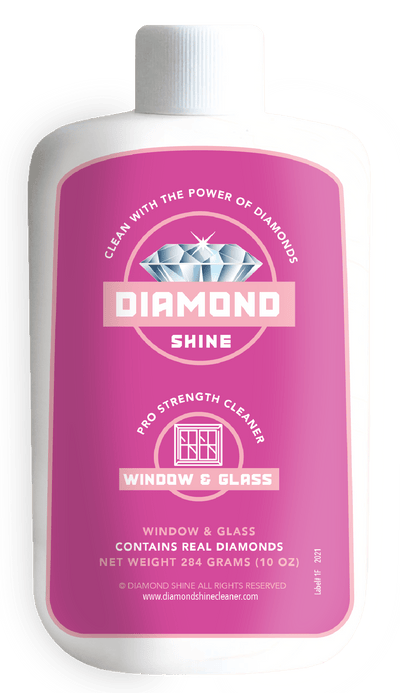
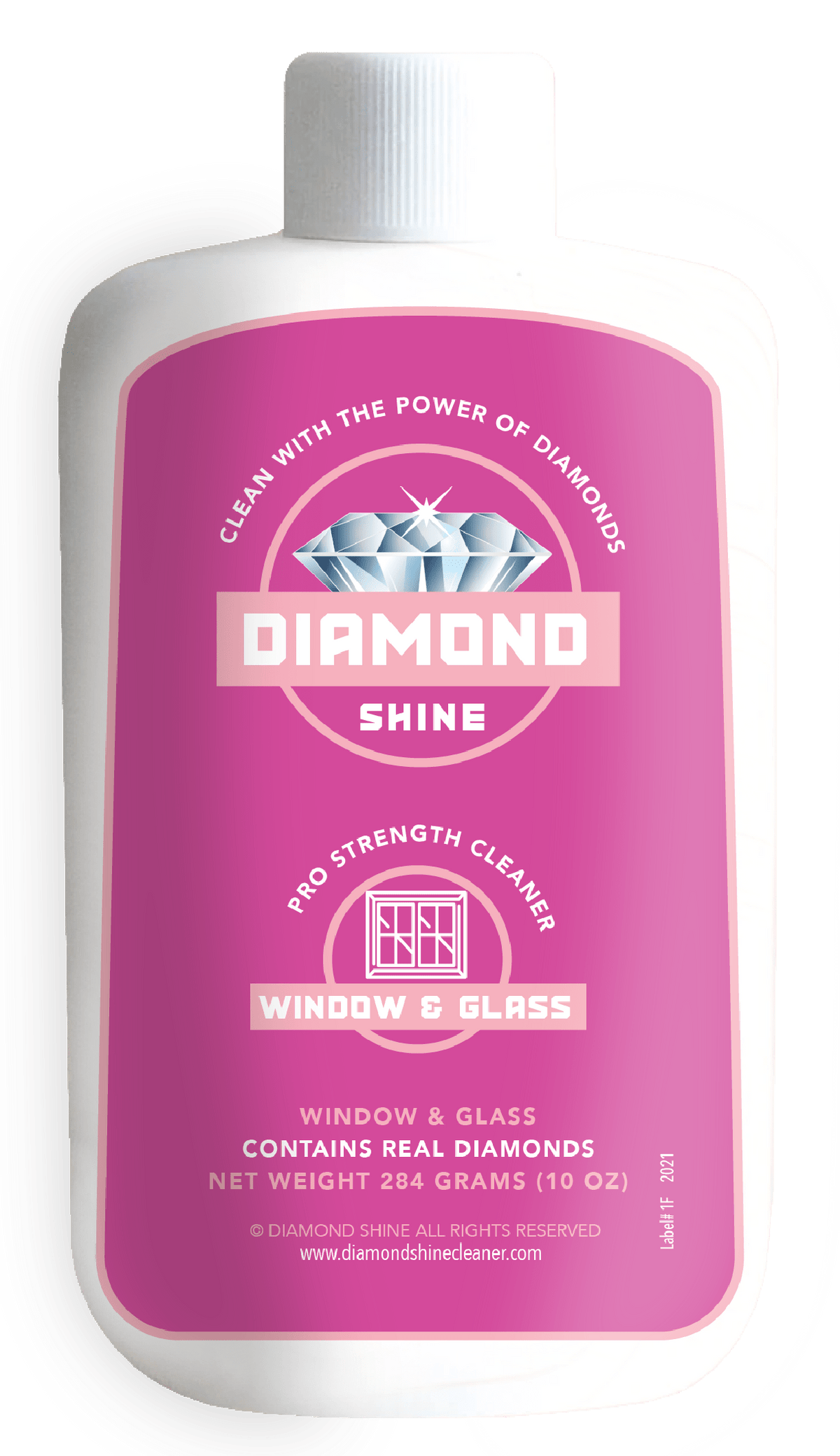
A light, even mist is enough. Diamond Shine Window and Glass Cleaner is formulated for spot-free glass, so the job is coverage and a clean cloth, not volume.
5. The spots aren’t dirt — they’re minerals
Here’s the one that defeats people. If your windows have cloudy white spots or a chalky film that survives every wash, you are not looking at dirt. You are looking at calcium and magnesium left behind when hard water evaporated on the glass — usually from a sprinkler that hits the window, or runoff from a roof or gutter.
Glass cleaner cannot remove it. Glass cleaner lifts oily film and dust; mineral deposits are bonded to the surface and need something that dissolves them. Scrubbing harder just polishes the deposit and risks scratching the glass.
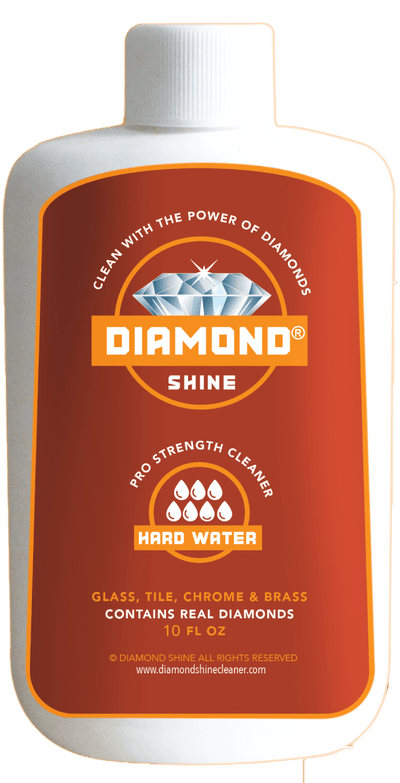
For that, use Diamond Shine Hard Water Cleaner, which is made for glass, tile, chrome and brass. Clear the mineral layer once, then your ordinary glass cleaner will keep the window looking right — and it will finally behave the way you expected it to.
And the part almost everyone skips: the tracks
Window tracks collect grit, dead insects and a grey sludge of dust and moisture. Every time it rains or you wash the glass, water runs through that channel and wicks the mess back up onto the pane you just cleaned. You can do everything else right and still get dirty streaks along the bottom edge within a day.
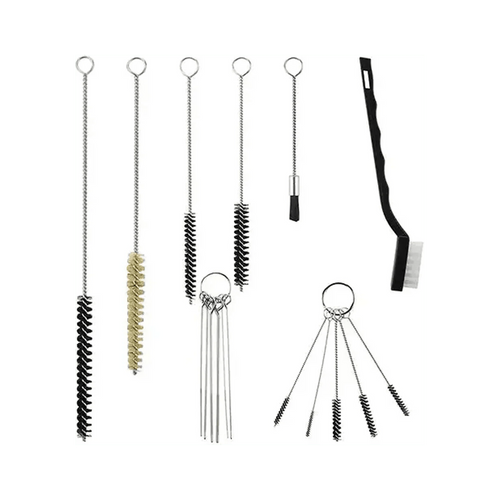
Clean the tracks first, not last. A vacuum takes out the loose debris; the corners and the channel need something narrow and stiff. The Diamond Shine 2-Piece Crevice Brush Set is built for exactly this kind of gap — tracks, corners, and the seams where the frame meets the glass.
The order that actually works
- Pick a shaded window, or wait for cloud.
- Vacuum and brush the tracks and frame.
- Knock the loose dirt off the glass, dry or with plain water.
- If there are cloudy mineral spots, treat those first and rinse.
- Mist glass cleaner lightly, clean with a damp microfiber.
- Buff immediately with a dry microfiber, before it can evaporate.
Do the tracks once a season and the glass whenever it bothers you. The mineral treatment is the one you should only need occasionally — and if you find yourself needing it constantly, check where your sprinklers are pointing. That is usually the whole story.