Diamond Shine Blogs
Low Shower Pressure? It's Probably Scale, Not Your Plumbing
Your shower used to feel like a shower. Now it sprays sideways, splits into two weak streams, and takes twice as long to rinse shampoo. The kitchen faucet does something similar — the water comes out angled, or it sputters, or the pressure drops off when you open it all the way.
Most people blame the plumbing or the water heater. Usually it is neither. It is a thin layer of mineral scale on the inside of the fixture, in a part you can unscrew with your hands in about forty seconds.
Why flow drops before anything looks dirty
Hard water carries dissolved calcium and lime. Every time you shut the tap off, a little water stays behind in the showerhead or the aerator. It evaporates and leaves those minerals as a solid. Then it happens again the next day, and the next.
The outside of the fixture can still look fine while this is going on, because the deposits build where the water sits longest: inside the nozzle holes, and on the small mesh screen inside the faucet tip. Those openings are tiny to begin with. It does not take much scale to cut them in half.
That is why this feels like a pressure problem and is not one. The pressure has not changed. The hole the water squeezes through got smaller.
Find out which part is blocked first
Before you take anything apart, do one test. Turn the shower on and look at the spray pattern. If some nozzles are dead and others are firing hard, the showerhead face is scaled. If the whole spray is weak but even, the restriction is further back, and that is more likely a valve or a supply issue worth a plumber's time.
At a sink, unscrew the aerator — the small ring at the very tip of the spout — and run the tap without it. If the flow suddenly surges, the aerator was your problem and nothing else needs touching. If it is still weak with the aerator off, stop and look upstream.
Clearing a showerhead face
Start dry. Rub your thumb firmly across the rubber nozzle tips — most modern heads have flexible nubs, and a lot of light scale pops right off under pressure. Do all of them, then run the water and look again. Sometimes that alone fixes it.
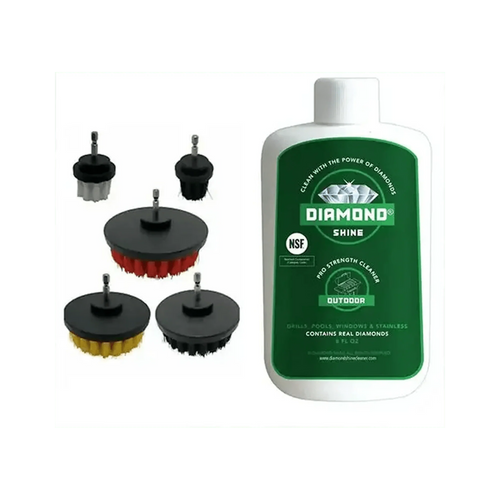
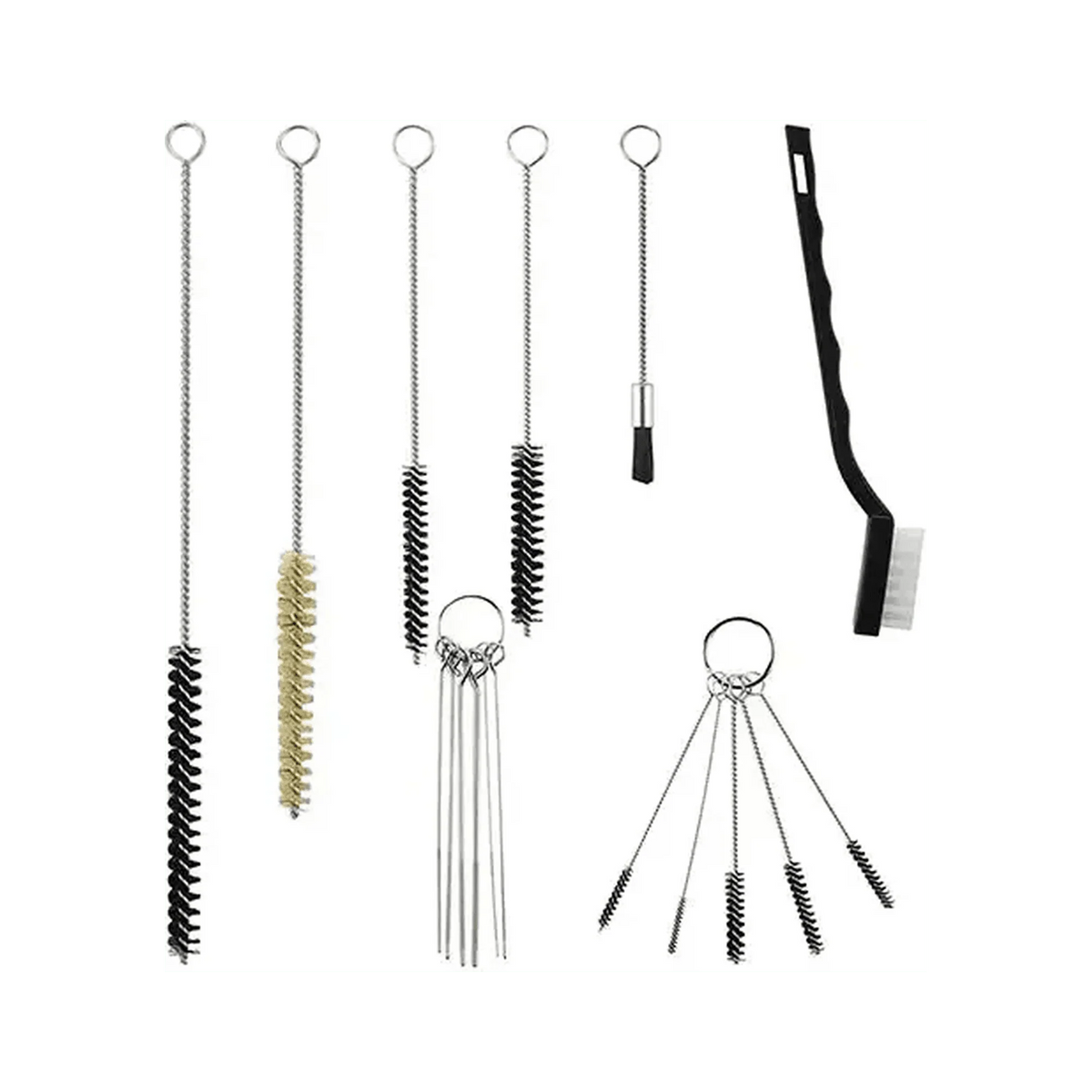
For the nozzles that are still plugged, you need something that fits inside the hole. The Diamond Shine 17-Piece Nylon Mini Cleaning Brush Set is built for exactly this scale of work — it includes nozzle cleaning needles plus nylon brushes in a range of diameters and lengths, from 4 inches up to 11, which is the only way to get at a passage that narrow. Work a needle into each blocked hole, wiggle it, then back it out. Flush the head with the water running so the debris you loosened leaves instead of resettling.
If your head unscrews, brush the inside of the inlet threads too. Scale collects there and on any internal screen, and you cannot see either while it is mounted.
Clearing a faucet aerator
Unscrew the aerator counter-clockwise. If it is stiff, wrap the ring in a cloth before using pliers so you do not chew up the finish.
Inside you will find a small screen and usually a plastic insert. Note the order they come out in — it matters on reassembly. Rinse everything backwards, from the clean side toward the dirty side, so grit leaves the way it came in rather than being pushed deeper into the mesh.
The mesh is where the real blockage lives, and it is too fine for a cloth. One of the smaller brushes from the mini brush set clears it without deforming the screen. Hold it up to a light when you are done — you should see light through the whole screen, not just the middle.
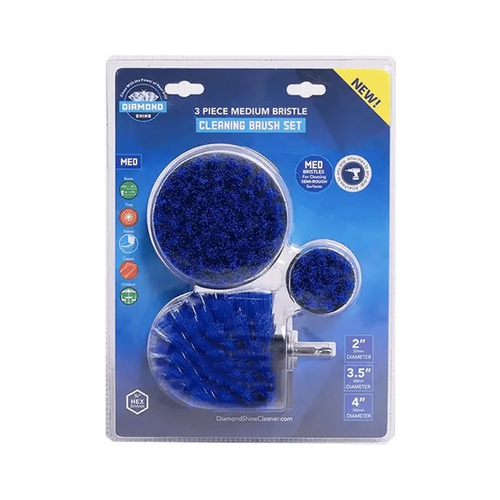
For the gap where the aerator meets the spout, and for the base of the faucet where it meets the counter, a narrow brush does better than a rag. The Diamond Shine 2-Piece Hard Bristle Crevice Cleaning Brush Set has slim angled heads that reach into those seams, and both brushes are dishwasher safe when you are finished.
Now deal with the chrome
Once flow is restored, look at the fixture itself. The cloudy white film around the nozzles and on the spout is the same mineral deposit, just on the outside where you can reach it.
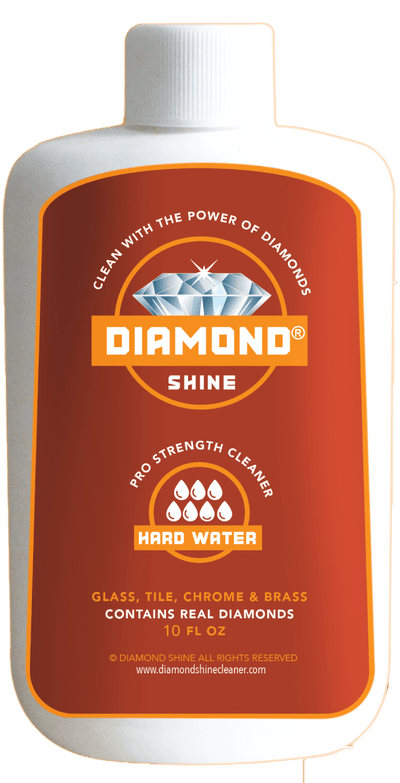
Diamond Shine Hard Water Cleaner is made for chrome and brass alongside glass and tile, and its non-abrasive polishing formula removes build-up without scratching the finish. Two things matter in how you apply it. Work it in with light pressure — the label calls for two to four pounds, and leaning harder is how people put swirl marks in chrome. And do not let it dry on the surface: work in a small area, rinse with water, then wipe the residue off with a clean dry cloth. A lint-free microfiber towel is the right tool for that last wipe, because a paper towel will leave fibers behind on wet chrome.
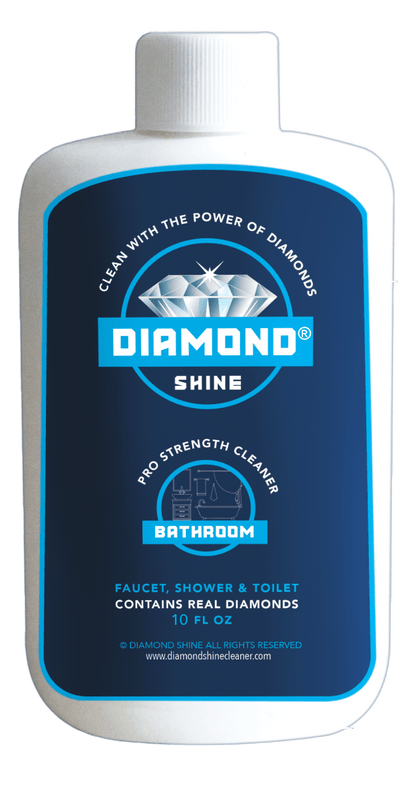
If the tile and glass around the fixture have the same haze, Diamond Shine Bathroom Cleaner covers that wider range — sinks, fixtures, tubs, tile, glass, chrome and fiberglass — and it neutralizes the alkalinity of the water spot minerals rather than only wiping the surface.
Then put it on a schedule
This job is quick when you do it often and miserable when you do not. Thin scale comes off with a brush. Scale that has been building for three years has to be worked loose in layers.
If your water is hard, pull the aerator every three months and the showerhead twice a year. It takes ten minutes. The alternative is never quite noticing the decline, replacing a perfectly good fixture because you assume it is worn out, then watching the new one do the same thing within a year.
The fixture was never the problem. The water was.