Diamond Shine Blogs
The Ring in Your Toilet Bowl Isn't Dirt — and Bleach Won't Remove It
Your toilet looks clean. You scrubbed the bowl, the seat, the base. And there is still a dull band circling the inside at the water level — gray, chalky white, or rusty orange-brown depending on your water. It does not come off. Or it fades for a day and comes back.
That ring is one of the most commonly mis-cleaned things in a house, for one reason: it is not dirt, and nothing meant for dirt will move it.
What the ring actually is
Look at where it sits: not the bottom of the bowl, not the upper sides, but exactly at the waterline, in a band an inch or so tall. That line is where water meets air, and where water evaporates.
Every gallon sitting in your bowl carries dissolved minerals: calcium and magnesium, and in a lot of supplies, iron. Water at the surface evaporates all day. The water leaves, the minerals stay, and they crystallize onto the porcelain in a layer thinner than paper. Tomorrow another layer goes down on top. Heavy calcium reads chalky gray or white; iron tints the band orange-brown, which is why people assume it is rust from the pipes.
So the ring is mineral scale bonded to the glaze — closer to the crust on a showerhead than to anything that belongs in a toilet.
Why bleach does nothing
Bleach is a disinfectant and a whitener: it kills organisms and strips color out of organic stains. A mineral deposit is neither.
Here is the trap. Bleach lightens how the ring looks without dissolving any of it. The bowl seems better for an afternoon, the deposit keeps collecting fresh minerals, and by morning you are sure the ring came back overnight. It never left — you bleached its color, not the scale.
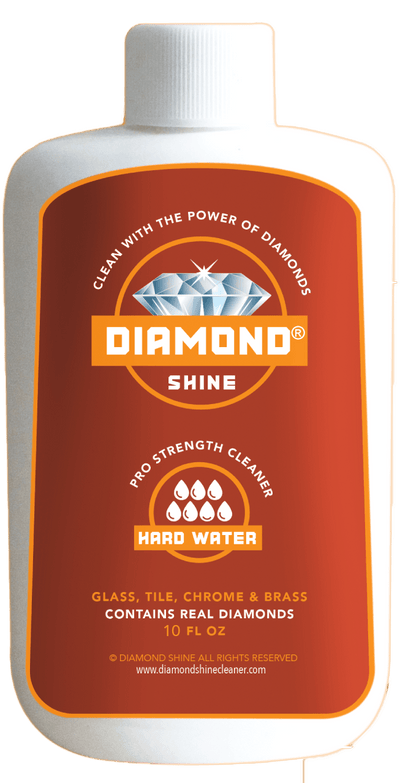
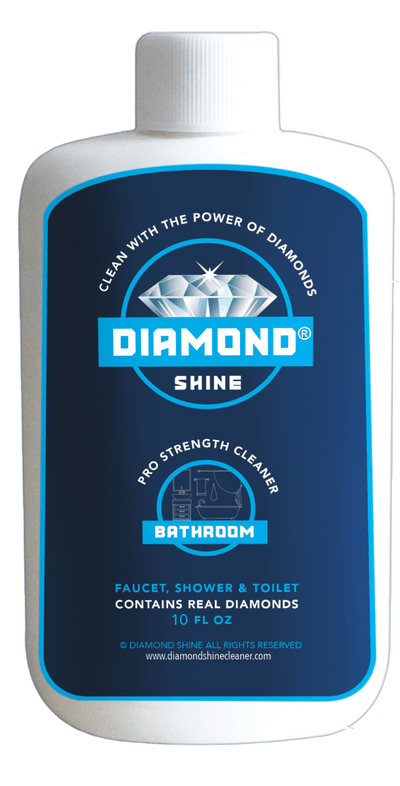
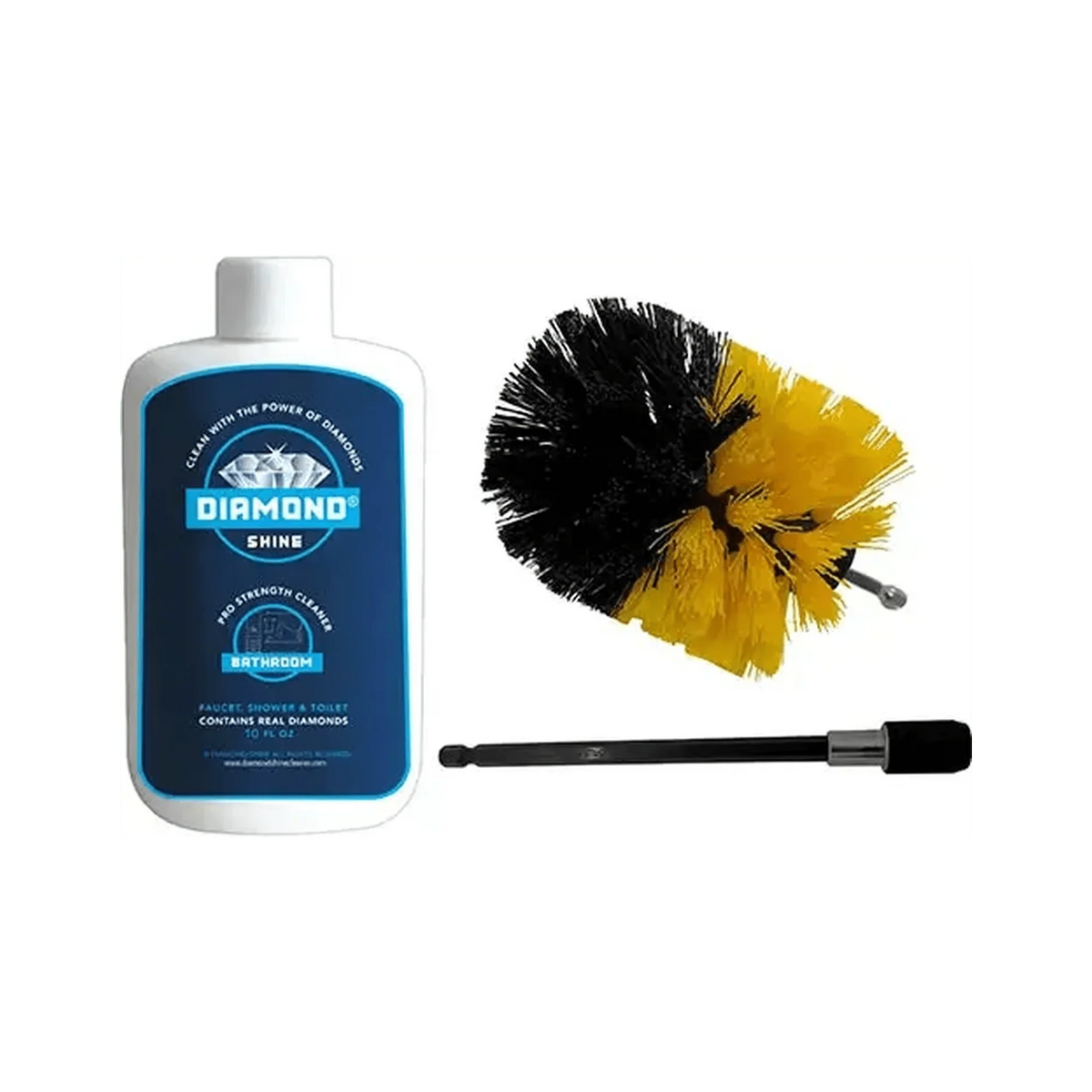
Build-up needs a cleaner made to break the deposit down rather than bleach it. Diamond Shine Bathroom Cleaner is formulated for lime, calcium and rust stains on tubs, tile, ceramic and chrome. For a ring that has had years to thicken, the Hard Water Cleaner is built for heavy scale.
Move the water before you clean anything
This is the step nearly everyone skips, and skipping it wastes whatever product you just bought. You cannot keep a cleaner on a surface that is underwater: apply it with the bowl full and it dilutes and drifts off in seconds. The sliver of ring above the water gets treated, the part below gets nothing, and that half-cleaned result is what makes people blame the cleaner.
Drop the water level first. Any of these works:
- Shut the supply valve behind the toilet and flush, so the bowl refills only partway.
- Push the standing water down the trap with a few firm strokes of a plunger.
- Sponge out the last inch and wipe the band so it is damp rather than submerged.
Give it time to work
Scale dissolves on a chemical schedule, not a scrubbing one. Follow the label directions to the letter: apply a small amount to a freshly washed surface, work it in a tight circular pattern with light pressure — two to four pounds, no more — and do not let it dry. Rinse, then wipe the residue off with a clean dry cloth.
Pressing harder is not the lever you think it is. Too much pressure can scratch the finish and does nothing for the chemistry — time does. If the ring is thick, plan on two passes: a second application onto a softened deposit beats ten more minutes of grinding.
Use a brush shaped like the bowl
A flat scrub pad rides across the curve of a bowl and only ever touches a narrow strip of it, which is why a ring often comes out blotchy: you treated all of it and physically contacted a third. A cone-shaped brush follows the curve instead. The Diamond Shine 3.5" Corner Drill Brush chucks into a cordless drill, and its domed shape sits into the bend of the bowl so the bristles stay in contact all the way around the waterline. The 6" extension keeps your hands clear of the water, and the medium nylon bristles handle bonded scale without marking porcelain. The rotary action covers the full ring in a fraction of the time a hand brush takes.
Check under the rim
The small holes under the rim scale up from the same minerals. When they narrow, the flush stops rinsing evenly — a weak swirl, water running down one side in streaks — and those streaks lay fresh deposits on the band you just cleaned. It is a large part of why some rings return so fast.
Run the corner brush up under the rim and treat those holes too — it is the same problem as scale clogging a showerhead, somewhere nobody looks.
Two things not to do
Do not reach for a pumice stone or a harsh abrasive. It will take the ring off and take microscopic scratches out of the glaze with it, and a roughened surface grips minerals better than a smooth one — so the ring returns faster and darker each time.
And never mix bleach with an acidic hard water cleaner — that combination releases chlorine gas in a small, poorly ventilated room. If you already poured bleach in, flush and rinse thoroughly before switching.
Keeping it from coming back
Once the ring is gone, the job is thirty seconds a week at the waterline. A one-week film wipes away with almost no effort; three months of layers is the project you just finished. The harder your water, the shorter that interval gets.
For the cleaner and the brush together, the Bathroom Cleaner and 3.5" drill brush combo pairs the 10oz bottle with the brush and extension — enough for a bowl, a tub and the fixtures.
The ring was never a sign you were not scrubbing hard enough. It was a sign you were cleaning a mineral with something meant for dirt.