Diamond Shine Blogs
Soft, Medium or Hard Bristles? How to Pick a Drill Brush Without Scratching the Surface
You clip a brush into your drill, lean on a stubborn ring in the tub, and two minutes later the stain is gone — along with a dull, hazy patch that wasn't there before. Or you get the opposite: you run a brush along a grout line for a full minute and nothing changes.
Both problems trace back to one decision most people skip. Bristle firmness is not a strength rating where harder is better. It is a match between the brush and the surface you are putting it on.
Firmness matches the surface, not the mess
It feels logical to reach for the stiffest bristle you own when the grime is bad. But the mess is not what you are protecting. The surface is.
A bristle only cleans when it can flex against the dirt and snap back. If the bristle is softer than the soil holding on, it bends and skates, and you spend five minutes accomplishing nothing. If the bristle is harder than the finish underneath, it stops flexing against the dirt and starts cutting into the surface instead.
So the question is never "how dirty is this?" It is "what is the softest thing in this equation?" Answer that, and the brush picks itself.
Soft bristles: anything you would hate to scratch
Start soft on any surface with a finish you cannot replace. Fiberglass tub and shower surrounds, acrylic inserts, painted or clear-coated automotive panels, gel coat on a boat, glass, polished chrome, laminate countertops, appliance faces.
These surfaces are softer than they look. Fiberglass and acrylic scratch easily, and once the finish is hazed it holds dirt worse than before — which is why a tub that has been scrubbed too hard starts getting dirty faster every month.
The 3-Pack Soft Bristle Drill Brush Set is the one to reach for here. Diamond Shine lists it for scratch-free cleaning, and on delicate surfaces that is the whole point: you are letting the cleaner and the rotation do the lifting rather than the bristle tip.
Medium bristles: the everyday default
Medium is where most household cleaning actually lives. Glazed ceramic tile, porcelain sinks and toilets, vinyl and linoleum floors, sealed countertops, cabinet fronts, upholstery and carpet, plastic patio furniture, trim and baseboards.
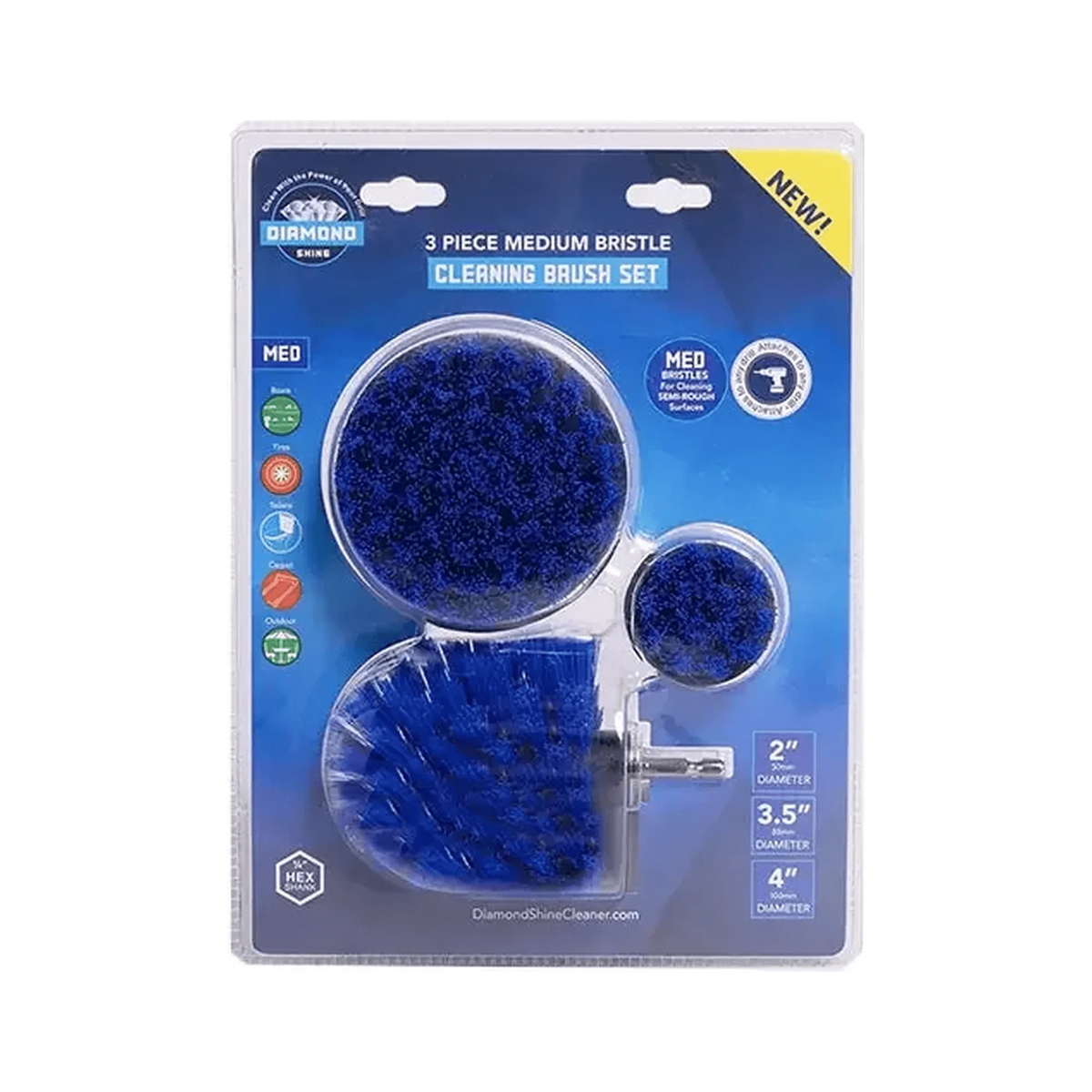
If you own exactly one set of drill brushes, make it medium. It has enough backbone to break up soap film and general household soil, but it is forgiving enough that a moment of extra pressure on a tile face will not cost you anything. The 3-Pack Medium Bristle Drill Brush Set covers that all-purpose range. When you are unsure which side of the line a surface falls on, medium is the safer guess than hard.
Hard bristles: porous, textured and genuinely tough
Hard bristles belong on surfaces that are already rough. Grout lines, unglazed and textured tile, concrete, brick, stone pavers, garage floors, cast iron, grill grates, wheel wells, truck bed liners.
The common thread is texture. Porous surfaces hold dirt down inside them where a soft bristle cannot reach, and they are hard enough that a stiff bristle will not hurt them. The 3-Pack Hard Bristle Drill Brush Set is built for that work.
Grout deserves a specific mention, because the grout line is soft but the tile beside it usually is not — and a wide brush hits both. A narrower, shaped head keeps the hard bristles down in the joint instead of dragging them across the tile face, which is what the 5-Piece Ultimate Tile Grout Scrubbing Brush Set is shaped to do.
The thirty-second test before you commit
When you genuinely cannot tell, test. Pick a spot nobody looks at — behind the toilet, inside the tub apron, the bottom of a door panel. Run the brush there for about ten seconds at low speed, dry it off, and look at it under a light from an angle rather than head on. Scratches hide when you look straight down at a wet surface.
If the patch is clean and unmarked, carry on. If you see fine haze or swirl marks, step down one firmness and give the cleaner longer to work instead.
Firmness will not fix a chemistry problem
Here is the trap that sends people up the firmness ladder in the first place. Mineral scale, soap scum and hard water spotting are bonded deposits, not loose dirt. No amount of bristle stiffness dissolves them — you just grind harder against a surface that is losing.
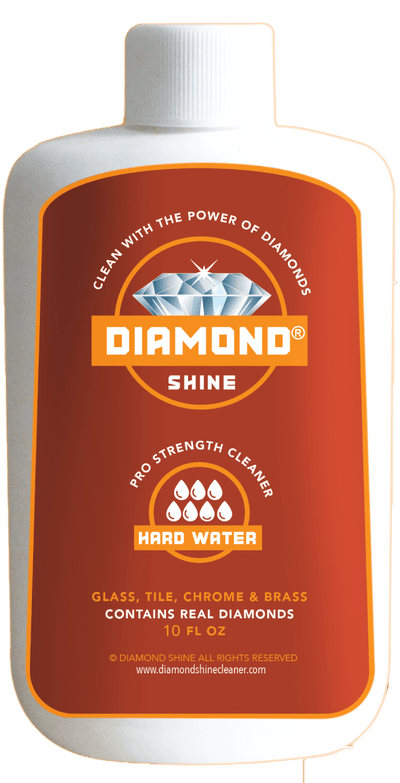
Those deposits need a cleaner formulated for them and, critically, time to work. Spray, then walk away for a few minutes and let it sit before the brush ever touches the surface. On glass, tile, chrome and brass, that is the job the Hard Water Cleaner is made for.
Come back after the dwell time and a medium or even soft bristle will often clear what a hard one could not touch dry. Before you step up a firmness, ask whether you simply went in too early.
Pressure and speed matter as much as the bristle
A drill brush is not a scrub brush with a motor. Pressure is the enemy. Let the bristle tips do the contact work, and keep the brush moving rather than parking it in one spot — that is how burnished rings and dull patches happen.
Run the drill at a low to moderate speed. High speed flings cleaner off the surface and heats the bristles, and hot bristles deform permanently. Keep the head flat instead of digging in with an edge, and work in overlapping passes.
A simple way to start
If you are building a set from nothing, buy medium first and use it everywhere. Add soft when you hit your first delicate surface — usually the tub or the car. Add hard when you get to grout, concrete or the grill.
Three firmness levels and a little patience with dwell time cover nearly everything in a house — and you stop trading a clean surface today for a scratched one next season.